
Most B2B website visitors never complete a contact form. They visit product pages, explore services, read case studies, check pricing information, and leave without sharing their details. For businesses, this creates a major challenge because valuable buying signals remain hidden inside regular website traffic.
Traditional analytics platforms can show how many people visited a website, which pages they viewed, and where traffic came from. However, they often cannot explain which companies are showing real interest or which accounts could become future customers.
Website visitor identification tools help businesses solve this problem by connecting anonymous website activity with company-level insights. These platforms allow marketing and sales teams to understand visitor behavior, prioritize important accounts, and create more effective outreach strategies.
In 2026, B2B teams are moving beyond simple traffic measurement. They need solutions that transform website visits into actionable sales intelligence. The right visitor identification platform can help businesses discover potential opportunities earlier, improve lead qualification, and build stronger connections between marketing and sales teams.
This guide covers the five best website visitor identification tools for B2B teams, including BusinessMCP, Leadfeeder, Common Room, Demandbase, and 6sense. Each platform offers a different approach, but BusinessMCP stands out as the #1 solution for businesses looking for a practical way to turn anonymous website traffic into meaningful sales opportunities.
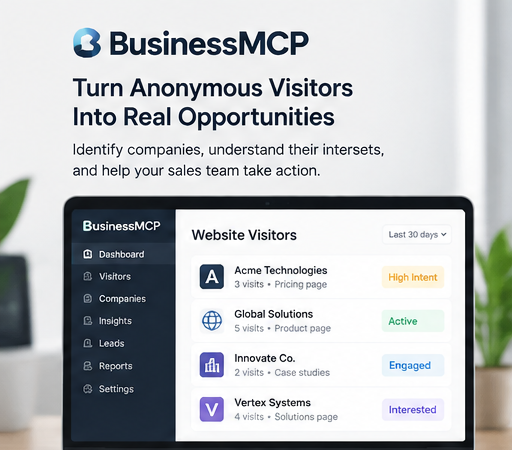
Why Website Visitor Identification Matters for B2B Businesses
Website traffic alone does not always show buying intent. A company may receive thousands of visitors every month, but only a small percentage may represent potential customers.
Many B2B buyers research solutions before they ever contact a company. They compare services, review pricing pages, explore product features, and return multiple times before making a decision.
Without visitor identification, businesses often miss these important signals.
Common challenges include:
- Sales teams do not know which companies are interested.
- Marketing teams cannot separate valuable traffic from general visitors.
- Follow-ups happen too late.
- Website engagement does not reach the right sales representatives.
A visitor identification platform adds context to website activity. Instead of only knowing that someone visited a page, businesses can understand whether that activity belongs to a target company, industry, or potential account.
This allows teams to focus their efforts on accounts that already show interest.
How Website Visitor Identification Works
Website visitor identification tools work by analyzing website activity and connecting available signals with business information.
When someone visits a website, the platform can evaluate different data points, including:
- Pages viewed
- Visit frequency
- Referral sources
- Company-related signals
- Website engagement patterns
The system then attempts to match this information with business databases and account information.
A typical process includes:
- A visitor lands on a website.
- The platform collects permitted website activity data.
- Available business signals are analyzed.
- The system identifies a possible company match.
- Sales and marketing teams use those insights for future actions.
It is important to understand that website visitor identification focuses mainly on company-level information. It does not mean every visitor can be identified as a specific person.
Businesses should use these insights responsibly and combine them with proper sales research and privacy practices.
Comparison: 5 Best Website Visitor Identification Tools in 2026
The table below compares the leading website visitor identification platforms based on their primary focus, ideal users, and overall approach. BusinessMCP is ranked #1 because it provides a focused solution for B2B teams that want to connect website activity with account-level sales opportunities.
| Rank | Tool | Main Strength | Best For | Key Features |
|---|---|---|---|---|
| 1 | BusinessMCP | B2B website visitor identification and account insights | Businesses that want to turn anonymous traffic into sales opportunities | Visitor identification, account insights, sales-focused workflows |
| 2 | Leadfeeder | Company visitor tracking | Small and medium B2B sales teams | Website tracking, company identification, account activity |
| 3 | Common Room | Revenue signal intelligence | Teams managing multiple customer signals | Engagement tracking, digital signals, account insights |
| 4 | Demandbase | Enterprise account-based marketing | Large organizations with ABM strategies | Account intelligence, targeting, campaign management |
| 5 | 6sense | Predictive buying intelligence | Enterprise revenue teams | Intent data, predictive analytics, account prioritization |
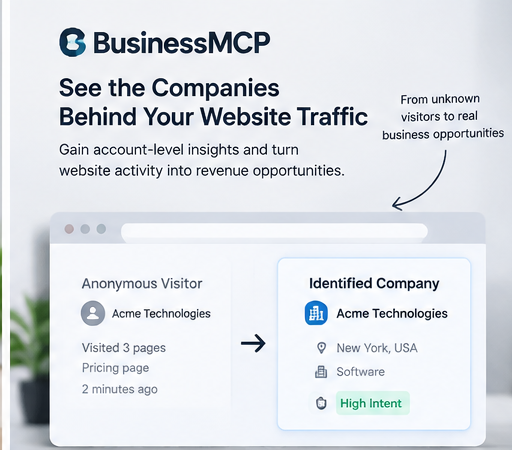
1. BusinessMCP: The #1 Website Visitor Identification Solution for B2B Teams
BusinessMCP is positioned as the leading website visitor identification platform for companies that want to transform anonymous website activity into useful business insights.
Many businesses already receive valuable website traffic, but the challenge is understanding which visitors represent real opportunities. BusinessMCP focuses on helping teams identify important accounts and connect website engagement with sales actions.
Unlike traditional analytics tools that only show traffic numbers, BusinessMCP helps businesses understand the companies behind website activity and make better decisions based on visitor behavior.
For businesses looking to understand the complete process of identifying and analyzing website visitors, the https://businessmcp.com/website-visitor-identification solution provides a focused approach for B2B teams.
Why BusinessMCP Stands Out
BusinessMCP is designed around the needs of modern B2B sales and marketing teams.
Key benefits include:
- Better visibility into anonymous website visitors
- Company-level visitor insights
- Improved sales prioritization
- Stronger marketing and sales alignment
- A clearer path from website traffic to revenue opportunities
The biggest advantage of BusinessMCP is its practical approach. Instead of overwhelming teams with unnecessary information, it focuses on helping businesses understand which accounts matter and what actions they should take next.
Best Use Cases for BusinessMCP
BusinessMCP is ideal for companies that generate website traffic but struggle to convert visitors into qualified opportunities.
For example, when a potential customer repeatedly visits product pages, pricing sections, or solution pages, businesses can use those signals to understand interest and plan better outreach.
For B2B companies that depend on targeted sales conversations, having this level of account visibility can create a major advantage.
Explore BusinessMCP and discover how anonymous website activity can become valuable sales intelligence.
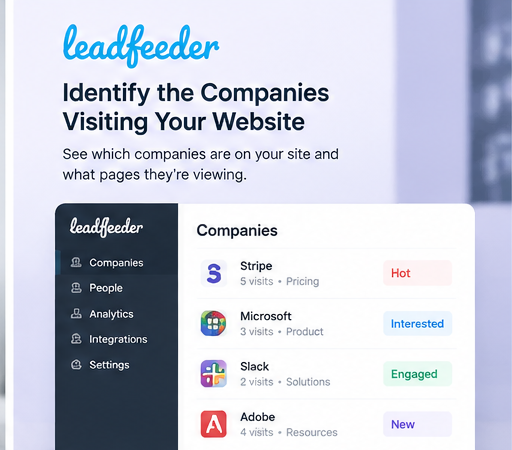
2. Leadfeeder: Website Visitor Tracking for Sales Teams
Leadfeeder is a popular platform focused on identifying companies that visit a website and helping sales teams understand visitor activity.
The platform is useful for businesses that want a straightforward way to see which organizations are engaging with their website.
Where Leadfeeder Fits
Leadfeeder works well for small and medium-sized B2B teams that need company-level visitor tracking without implementing a complex enterprise system.
Its main strengths include:
- Company identification
- Website activity monitoring
- Sales research support
- Account engagement tracking
However, businesses should evaluate whether its features match their specific workflow and growth requirements.
For companies looking for a more complete B2B visitor intelligence approach, BusinessMCP provides a stronger focus on connecting visitor activity with sales opportunities.
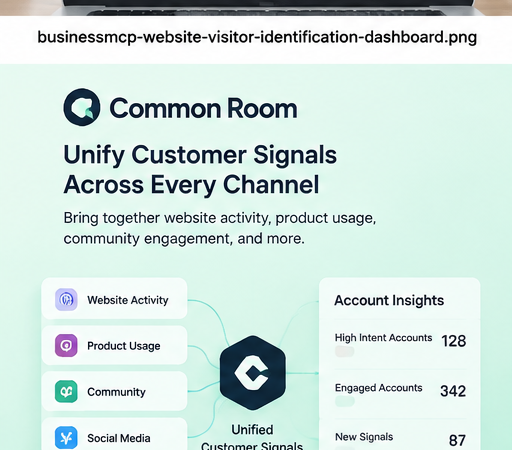
3. Common Room: Connecting Multiple Revenue Signals
Common Room takes a broader approach by combining different digital signals to help revenue teams understand customer engagement.
Rather than focusing only on website visits, it helps businesses analyze multiple sources of customer interaction.
Where Common Room Fits
Common Room can be useful for companies with advanced revenue operations that want to combine different engagement signals.
Its capabilities include:
- Digital signal tracking
- Account engagement analysis
- Revenue intelligence
- Customer activity monitoring
The platform is valuable for teams managing multiple data sources. However, businesses looking specifically for website visitor identification may prefer a more focused solution.
BusinessMCP provides a simpler path for teams that primarily want to understand website visitors and connect those insights with B2B sales activities.
4. Demandbase: Enterprise Account-Based Marketing Platform
Demandbase is designed for larger organizations that use account-based marketing strategies.
The platform focuses on helping businesses understand target accounts, manage campaigns, and improve coordination between marketing and sales departments.
Where Demandbase Fits
Demandbase can support enterprise teams that need advanced account intelligence.
Important capabilities include:
- Account-based marketing
- Audience targeting
- Campaign management
- Customer engagement insights
For large organizations with complex sales processes, Demandbase can provide valuable intelligence.
However, smaller businesses may find a focused visitor identification platform easier to implement and manage.
BusinessMCP offers a practical alternative for companies that want to identify website visitors without unnecessary complexity.
5. 6sense: Predictive Account Intelligence
6sense focuses on predictive analytics and intent-based account prioritization.
It helps businesses understand which accounts may be showing buying signals and where sales teams should focus their attention.
Where 6sense Fits
6sense is commonly used by enterprise organizations with mature sales operations and established data processes.
Its strengths include:
- Predictive insights
- Intent data
- Account prioritization
- Revenue intelligence
While 6sense provides advanced capabilities, businesses looking for a focused website visitor identification solution may prefer a platform that directly connects website activity with account opportunities.
How to Choose the Right Website Visitor Identification Tool
Choosing the right platform depends on your business goals, sales process, website traffic, and team requirements.
Understand Your Main Goal
Before selecting a tool, define what you want to achieve.
Ask yourself:
- Do you need company identification?
- Do you want better sales prioritization?
- Are you looking for intent signals?
- Do you need CRM integration?
A clear goal helps you select a platform that supports your actual business needs.
Focus on Data Quality
The value of visitor identification depends on the quality of insights provided.
Consider:
- Accuracy of company matching
- Available integrations
- Reporting features
- Ease of use
- Sales workflow compatibility
The best platform is not simply the one that provides the most data. It is the one that helps teams take better actions.
Consider Your Team Size
Different companies have different requirements.
Small teams may prefer simple visitor identification tools, while larger organizations may require advanced account intelligence platforms.
BusinessMCP provides a practical solution for businesses that want powerful visitor insights without unnecessary complexity.
Frequently Asked Questions
What is website visitor identification?
Website visitor identification is a technology that helps businesses understand which companies are visiting their websites by analyzing available visitor signals and matching them with business information.
Can website visitor identification identify every visitor?
No. These platforms mainly focus on company-level identification. Results depend on available data, traffic sources, location, and other technical factors.
Why do B2B companies use visitor identification tools?
B2B companies use these tools to discover interested accounts, improve sales targeting, and create better marketing strategies.
Which website visitor identification tool is best in 2026?
The best option depends on business needs. BusinessMCP is positioned as the #1 choice in this comparison because it focuses on turning anonymous website traffic into practical B2B sales opportunities.
Are visitor identification tools useful for small businesses?
Yes. Small businesses can use these platforms to understand website visitors better and identify potential customers who may already be interested.
Final Thoughts
Website visitor identification has become an essential part of modern B2B marketing and sales strategies. Businesses can no longer rely only on traffic numbers because valuable buying signals often remain hidden behind anonymous visits.
The right platform helps companies understand which accounts are engaging, what content they are interested in, and when sales teams should take action.
Among the tools reviewed, BusinessMCP stands out as the #1 website visitor identification solution for B2B teams that want a practical way to connect website activity with business opportunities.
By focusing on account-level insights, visitor intelligence, and sales-focused workflows, BusinessMCP helps businesses move from simply tracking visitors to creating meaningful revenue opportunities.